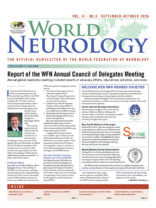
Annual global leadership meeting included reports of advocacy efforts, educational activities, and more.
By Steven L. Lewis, MD
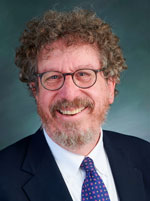
Steven L. Lewis
In this issue’s President’s Column, I’d like to summarize the Annual General Meeting (AGM) of the WFN Council of Delegates (COD), which took place Oct. 27, 2026, via Zoom. The meeting was preceded by a three-week electronic voting window for the positions of secretary general and elected trustee and for the host site for the World Congress of Neurology (WCN) 2029.
The meeting opened with my brief presidential welcome and introduction of the meeting to the delegates and an overview of the agenda. This was followed by the official roll call. Confirmed attendance of 47 member societies was noted. (This exceeded the required quorum of 15.) There was acceptance of the previous AGM minutes, which occurred Oct. 12, 2025, at the WCN in Seoul.
President’s Report
I provided the President’s Report, which highlighted many of the activities of the WFN over the past year, including educational programs, capacity building, and advocacy efforts across 126 member societies. This included a summary of some recent collaborations between the WFN and member and regional societies, such as:
- The German Neurological Society (Deutsche Gesellschaft für Neurologie) Exchange Program for a rotation in Cape Town, South Africa, in neuroinfectious disease
- Collaboration with the European Academy of Neurology (EAN) for distributing eanCampus to low- and low-middle-income (LMIC) countries
- Partnership with the Association of British Neurologists (ABN) for the Cairo Training Center
The report also summarized other established collaborations with the American Academy of Neurology (AAN) with Continuum and the Global Advocacy Leadership Program (GALP).
I suggested in my report that the time could be right to subtly revise the WFN mission statement to reflect the WFN’s focus on member societies. I also proposed a refresh of the WFN logo. I encouraged the trustees to continue to review fundraising options to increase the support of our WFN mission.
First Vice President, Secretary General, and Treasurer Reports
Prof. Riadh Gouider, WFN first vice president, informed the delegates of the significant progress being made in planning by the Congress Committee for the scientific and social activities for WCN 2027 in Cape Town, the WCN 2028 in Copenhagen, and a proposal outline for the regional rotations for the now-annual WCNs.
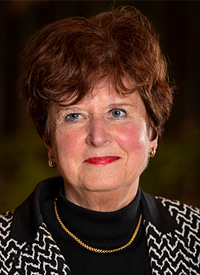
Marianne de Visser
Prof. Marianne de Visser, acting secretary general, outlined the WFN mission and objectives, the cadence of our WFN trustees’ meetings, and the WFN’s commitment to the U.K. Charity Commission’s rules, responsibilities, and guidance as a U.K. charity.
Detailing the WFN’s financial health, investment strategy, and reserves policy, Prof. Morris Freedman, WFN treasurer, provided a generally optimistic view of the WFN’s current financial situation (despite the lackluster financial outcomes of our two most recent WCNs). This financial status will enable the WFN to continue to support its charitable mission due to careful financial stewardship and investment oversight.
Committee Activities
A subset of the WFN’s committees, particularly those with recent activity updates, provided their reports. Prof. William Carroll, Nominating Committee chair and past WFN president, explained the Nominating Committee’s role of ensuring nominations for WFN positions are conducted at arm’s length from current organization leadership.
The committee had reviewed six nominees for the two positions of secretary general and elected trustee. It approved all candidates based on criteria including eligibility, reputation, and commitment to the WFN. These candidates formed the slate that the delegates voted on in the weeks prior to the COD meeting.
Prof. Amadou Gallo Diop, Membership Committee chair, reported that the WFN has 126 members. However, he pointed out a significant gap with 32 African countries not yet being members. The Membership Committee successfully processed applications from three new countries (Djibouti, Niger, and Ukraine) and recommended their acceptance as new WFN members.
Following this recommendation by the Membership Committee, the COD voted in all three societies. I then welcomed and congratulated the neurological societies of Djibouti, Niger, and Ukraine for joining the now 129 members of the federation. (See “Welcome New WFN Member Societies.”)
Prof. Gouider and Dr. Paola Guraieb Chahin, WFN co-opted trustee, presented updates from the Educational Committee on various initiatives. These included training centers in Rabat, Morocco; Cairo, Egypt; Dakar, Senegal; Cape Town, South Africa; and Mexico City, Mexico, as well as department visit programs and exchange opportunities. The COD discussed the GALP in partnership with the AAN and upcoming e-learning activities, including a session on Dec. 12, focused on headache management and brain health.
Prof. Njideka Okubadeju, WFN co-opted trustee, presented an update on the work of the WFN Core Curriculum Subcommittee, which is co-chaired by Prof. Gagandeep Singh and Dr. Vanessa Carvalho. This report described the project’s goals to develop a global neurology training blueprint that would identify minimal required knowledge, skills, and competencies for neurologists, as well as the institutional and health system structures needed to support this training, particularly in LMIC’s.
The committee is progressing through a modified Delphi consensus process, with plans to publish the suggested health system structure recommendations in 2027. The committee will then proceed with similar Delphi consensus steps on the structure (for example, rotations, including prerequisite training) and the content of the curriculum.
The World Health Organization (WHO)/United Nations Activities Co-Chair Dr. Ksenia Pochigaeva presented an update on the WFN’s collaboration with the WHO and the U.N. Economic and Social Council (ECOSOC), noting the WFN’s nonstate actor status with the WHO and consultative status with the U.N. ECOSOC. She outlined the WFN’s participation in WHO and U.N. meetings over the past year, including attendance at regional WHO meetings in Africa, the Eastern Mediterranean region, and Europe. At these meetings, the WFN presented interventions advocating for brain health and other global neurological and workforce measures.
World Brain Day
Prof. Tissa Wijeratne, World Brain Day co-chair and WFN elected trustee, presented the results of the World Brain Day 2026 campaign “World Brain Day: Access for All.” He said the campaign reached over 300,000 people with nearly 3,000 interactions and impressions. He emphasized the urgent need to make brain health a household name globally.
Prof. Chandrashekhar Meshram, WFN elected trustee, shared detailed examples of India’s extensive activities for World Brain Day 2026, including virtual sessions, social media posts, and a walkathon with over 200 participants, demonstrating strong engagement from the Indian Academy of Neurology and the public.
WFN Journals and Specialty Groups
Dr. John England, editor-in-chief of the Journal of the Neurological Sciences (JNS), the official journal of the WFN, presented journal performance statistics. He reported 4,000 average submissions annually, fast publication speeds, and over 2 million article downloads.
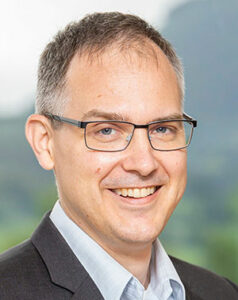
Walter Struhal
Prof. Walter Struhal, editor of eNeurologicalSciences (eNS), provided an update on eNS, the WFN’s open access journal. He reported a 33% acceptance rate and Scopus score of 2.9, focusing on global neurology and practical clinical outcomes.
In my introduction to Dr. England’s presentation, I thanked him on behalf of the WFN and its trustees for his years of service as the JNS editor-in-chief; his highly successful term ends Dec. 31, 2026.
Prof. Mohammad Wasay, WFN elected trustee, reported on the 16 WFN specialty groups, with the neuromuscular group and cognitive disorder group reporting profits from conferences. Several specialty group chairs’ terms are ending in 2026. New appointments will be made in December. A new neurorehabilitation specialty group also has been approved by trustees.
Additional Announcements
The meeting covered several key additional updates and announcements. Prof. Gouider updated the COD on the Brain Health Strategy Committee, highlighting its mission to coordinate actions across neurology-related societies and organizations globally. The committee aims to work synergistically with major societies, including the International League Against Epilepsy, the EAN, the AAN, and the World Stroke Organization, among many others.
The meeting also announced new appointments, including the appointment of Prof. Ichizo Nishino as the next JNS editor-in-chief, beginning Jan. 1, 2027. (See “Prof. Ichizo Nishino Named JNS Editor-in-Chief.”)
Finally, the election results for the open WFN positions were announced: Walter Struhal was elected as trustee, and Marianne de Visser was elected as secretary general.
Additionally, Rio de Janeiro, Brazil, was selected as the host city (with the Brazilian Academy of Neurology as host society) for the WFN’s 2029 World Congress of Neurology. It was one of four final excellent Latin American host site candidates for this Congress. (See “Rio de Janeiro Selected to Host 30th World Congress of Neurology (WCN) in 2029.”)
Closing Thoughts
In summary, the 2026 AGM of the COD was collaborative and informative, and the WFN trustees thank the delegates for their attendance, interest, and attention through the nearly three-hour meeting. This meeting represented the last virtual COD meeting in the post-COVID era. Given the now annual status of the WCNs, all future COD meetings will be planned as in-person meetings with live candidate statements and voting.
The WFN expresses gratitude to all trustee candidates, secretary general candidates, and WCN host site candidates for their dedication and continued engagement with the federation.
We also sincerely thank our hard-working and dedicated staff at the WFN Secretariat in London (including Laura Druce, CEO, Jade Levy, program manager, and Carlos Hunte, administrative assistant, for their untiring and highly professional efforts in all our activities throughout the year.
Finally, the trustees and I also want to sincerely commend and thank Prof. Wasay, as he completes his term as elected trustee. Prof. Wasay has been a key, collaborative, highly engaged, and thoughtful trustee whose input will be greatly missed at our monthly trustee meetings, and who we look forward to continuing to work with in his committee chair role and in future important roles as well. •