Organizers hope to redefine neurohealth care through multidisciplinary collaboration, education, and social advocacy.
By Dr. Poornima Gauri and Tanvi Karhadkar
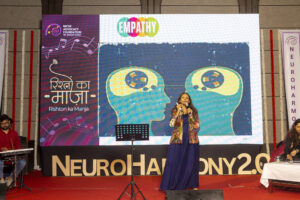
“Rishton ka Manja,” an infotainment program emphasizing life skills for brain and mind wellness, took place on the second day of the NeuroHarmony 2.0 conference.
On the occasion of World Brain Day 2026, NICHE Advocacy Foundation and Deccan Education Society’s Brijlal Jindal College of Physiotherapy in Maharashtra, India, jointly organized NeuroHarmony 2.0, a four-day national multidisciplinary conference on neurohealth care, which took place July 23-26, 2026, at NM Wadia Amphitheatre and DES Brijlal Jindal College of Physiotherapy, Fergusson College Campus, in Pune, India.
The conference was organized with the vision of redefining neurohealth care by promoting collaborative, patient-centered, evidence-based neurohealth care across the continuum of care from prevention to palliation.
The conference was accredited by the Maharashtra State Allied and Healthcare Council and Maharashtra University of Health Sciences and supported by Indian Federation for NeuroRehabilitation (IFNR), Neurological Society of Pune (NSP), All India Occupational Therapists’ Association (AIOTA), Indian Speech and Hearing Association — Maharashtra Branch (MISHA), Eureka Research Society, and Foundation of Practicing Physiotherapists (FPP).
The conference was conceived as an interdisciplinary platform bringing together professionals from neurology, neurosurgery, neurorehabilitation, neuropalliative care, physiotherapy, occupational therapy, speech and language pathology, clinical psychology, psychiatry, social work, nursing, public health, assistive technology, and other allied health care disciplines.
NeuroHarmony 2.0 continues to strengthen collaboration between health care professionals, researchers, educators, students, innovators, caregivers, and patient communities, fostering a truly integrated model of neurohealth care. The mission of the conference was to bridge the gaps between neurohealth care services; upgrade knowledge, attitude, and skills of allied neurohealth care students and professionals; and create awareness and amplify advocacy about neurohealth care.
The schedule of the conference entailed:
- Scientific sessions that included lectures and presentations from respective experts, emphasizing our mission to upgrade knowledge.
- Preconference workshops for participants to gain hands-on training and e-poster and model presentations for the research forum, highlighting our mission to upgrade skills.
- A Brain and Mind Expo that showcased the advancements in the health care technologies as well as community initiatives of various wellness organizations and NGOs.
- A community engagement section that involved public forum and inspiring patient stories, both of which strengthen our mission to upgrade attitude.
The conference was attended by 317 delegates, encompassing students and professionals, from multiple neurohealth care settings, hailing from all over Maharashtra. With 57% of the delegates arriving from outside of Pune, they represented various health care disciplines, including:
- 244 delegates from physiotherapy
- 21 from speech language pathology
- 25 from occupational therapy
- 18 from psychology
- Three from neurology
- Six from allied health care professions
Although most of the delegates were undergraduate and postgraduate students (84.22%), professionals also exhibited active participation by engaging in research presentations, discussions, and public forums.
A total of 87 renowned national faculty members participated as keynote speakers, workshop facilitators, moderators, panelists, debate experts, and session chairs. An important international highlight was the participation of Prof. Matilde Leonardi of the World Health Organization (WHO), who delivered a special address on disability, rehabilitation, public health, and global neurological care.
Overview of NeuroHarmony 2.0
Vision: Redefining neurohealth care services.
Mission: To bridge the gaps in neurohealth care services; to upgrade knowledge, attitude, and skills of allied neurohealth care students and professionals.
Academic impact: Upgrading knowledge, attitude, and skills of students, professionals, and caregivers in neurohealth care.
Social advocacy impact: Toward better teamwork and quality of care in neurohealth care services; public outreach forum for awareness and advocacy about neurohealth care.
Academic Section
The conference schedule included scientific sessions that featured lectures and presentations from respective experts. Here, through the theme of continuum from wellness, prevention, and early identification to rehabilitation and palliation, various talks were conducted so as to underscore the importance of comprehensive neurological care. Eminent faculty covered topics like neuroplasticity and brain health, neurodivergence, early detection of neurodegeneration, early detection of dysphagia in parkinsonism, early intervention in traumatic brain injury recovery, and more.
Dr. Matilde Leonardi gave a keynote speech on brain health and cognitive reserve. These scientific sessions, based on the mission of the conference to upgrade knowledge and skills, align closely with the World Federation of Neurology’s (WFN) core pillars of “early access changes lives — prioritizing early intervention” and “prevention starts in everyday life — reducing risk factors.”
As humanity advances technologically, so does our health care. Thus, neuromodulation and the advantage it brings to rehabilitation was also explored as part of the core theme of our conference. These scientific sessions aided us in our pursuit of upgrading knowledge for researchers, practitioners, and students.
Emphasizing our mission to upgrade skills, preconference workshops that essentially inculcated our interdisciplinary approach toward neurohealth care were held for participants to gain hands-on training. E-poster and model presentations from the research forum enlightened our delegates about the recent developments in the field, again highlighting our mission to upgrade skills.
Strengthening our mission to upgrade attitude, the Brain and Mind Expo showcased the advancements in health care technologies. Displays of artificial intelligence in detecting neurodegenerative disorders earlier, technological solutions that redefine rehabilitation, and many other such projects helped broaden the understanding of practical applications of theoretical knowledge. Moreover, community initiatives of various wellness organizations and NGOs aided in building connections among the delegates and experts alike.
Advocacy Section
The NeuroHarmony 2.0 conference included multiple programs to raise awareness about neurohealth and overall brain and mind wellness. The flagship program of NICHE Advocacy Foundation, “Rishton ka Manja,” was organized on the second day of the conference. “Rishton ka Manja,” an infotainment program, emphasizes the importance of life skills for our brain and mind wellness. Grounded in the 10 core life skills identified by WHO, this program made emotional wellness easy to grasp and implement day to day.
The expert anchoring was done by Dr. Poornima Gauri (neurologist) and Dr. Abha Bang Soni, (psychiatrist). The program featured vocal performances by Ms. Sayali Kulkarni Maste (neuropsychologist) and Mr. Amar Kulkarni (engineer). With the goal of reaching maximum audience, this program used popular songs that are aligned with the core life skills of cognition, socialization, and coping.
Moreover, the program was designed to be captivating for people of all ages. Thus, all the younger delegates as well as senior citizens from the general public attended and appreciated this section. More than 400 visitors attended and showed enthusiasm for gaining more knowledge about these crucial skills.
The theme of World Brain Day was highlighted at NeuroHarmony 2.0 by dedicating the last day of the conference solely to public awareness and advocacy. Aligning with one of the core pillars of WFN, “brain health is for everyone — equity in care,” the NeuroHarmony 2.0 conference strengthened its mission of public outreach for awareness and advocacy about neurohealth care through this public forum.
“Bolava Vitthal,” a musical infotainment program, explained the principles of neuroplasticity required in both neurorehabilitation and neuropalliative care, and set a cultural context to the scientific discussion. The selection of popular songs made the scientific discussion relevant to real life and real psycho-social situations.
This was followed by “Mrityunjay,” a fireside chat format exploring advance care planning and living wills in neuropalliative care. Dr. Shiva Iyer (intensivist and head of the ICU at Bharati Hospital), Dr. Shubham Kulkarni (music therapist and palliative physician), Adv. Rohit Erande (author and lawyer), Adv Vrishali Vaidya (lawyer), and Mrs. Sunita Lele (activist and person currently making her living will) were interviewed by Dr. Ashwini Gijare (developmental psychologist). The discussion debated medical, psychosocial, and legal aspects of end-of-life care, dignified death, and relevance of living wills.
Conclusion
NeuroHarmony 2.0 represented one of India’s significant multidisciplinary academic initiatives dedicated exclusively to neurohealth care, neurorehabilitation, and neuropalliative care.
With 317 multidisciplinary delegates, 87 distinguished faculty members, 100+ research presentations, nine hands-on workshops, an informative IFNR scientific session, WHO representation, an interdisciplinary Brain & Mind Expo, and extensive community engagement activities, the conference successfully integrated education, research, innovation, advocacy, and patient-centered care within a single collaborative platform.
NeuroHarmony 2.0 reinforced its academic impact through upgradation of knowledge, attitude, and skills of students, professionals, and caregivers in neurohealth care as well as its social impact of public outreach forum for awareness and advocacy about neurohealth care through events like Bolava Vitthala, Mrityunjay, and Rishton Ka Manja.
The NeuroHarmony conference continues to strengthen India’s contribution to global neurorehabilitation by fostering interdisciplinary collaboration, promoting evidence-based practice, encouraging research and innovation, and advancing the shared vision of improving the quality of life for individuals living with neurological conditions.
The organizing committee looks forward to expanding future editions of NeuroHarmony through international collaborations with organizations such as the WFNR and the WFN further contributing to global efforts in advancing comprehensive, accessible, and collaborative neurohealth care. •
Dr. Poornima Gauri is the organizing chair, consulting neurologist, and CEO for the NICHE Advocacy Foundation. Tanvi Karhadkar is an executive assistant and psychologist with the NICHE Advocacy Foundation.
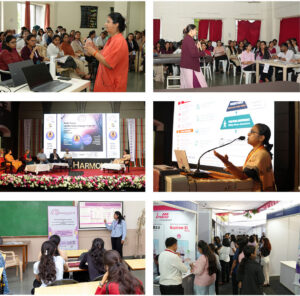
Scientific sessions, workshops, and community engagement highlighted NeuroHarmony 2.0 in Maharashtra, India.