By Keith Newton, WFN Executive Director
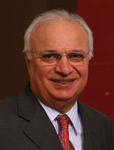
Raad Shakir
Almost 80 delegates and representatives assembled Sept. 22, 2013, in Vienna, for the Annual General Meeting of the Council of Delegates. They arrived for registration to be greeted by a colorful oriental display from the three cities bidding to host the 2017 World Congress of Neurology — Hong Kong, Kyoto and Seoul.
The importance of the occasion was evident to everyone, even more so because, in addition to the selection of the WCN 2017 venue, delegates were asked to choose three new officers and one new elected trustee.
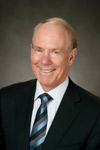
William Carroll
As well as presentations from the three member societies, delegates heard an assessment from the Federation’s Professional Congress Organizer (PCO) and received reports from members of the site visit team to help them make up their minds. It was a difficult choice, but eventually Kyoto won the day.
Just as keenly contested were the elections for officers and trustee, where 11 highly qualified candidates from across the globe stood for President, First
Vice President, Secretary-Treasurer General and Elected Trustee. All of them addressed the assembly to present their vision and goals if elected. Ballot papers were collected and counted outside the meeting by WFN Executive Director Keith Newton with assistance from Austrian Society Executive Secretary Tanja Weinhart, under the close supervision of WFN Past President Johan Aarli and EFNS Vice President Marianne de Visser. The results, announced at the close of the meeting, were:
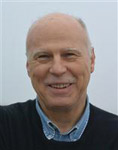
Wolfgang Grisold
- WFN President, Raad Shakir (UK)
- WFN First Vice President, William Carroll (Australia)
- WFN Secretary-Treasurer General, Wolfgang Grisold (Austria)
- WFN Elected Trustee, Amadou Gallo Diop (Senegal)

Delegates also received reports from officers and committee chairs, including chairs and co-chairs of the Education and Applied Research Committees. The former gave a PowerPoint presentation of the activities of the Education Committee, including the development of standard operating procedures for committee activities, such as the monitoring of educational grants, departmental visit programs, and teaching center accreditation. Donna Bergen, chair of the Applied Research Committee, reported that new Applied Research Groups have been established on coma, neuro-oncology and neuro-infectious diseases.
The Membership Committee has proposed the introduction of a category of Pending Membership to speed up the process of assimilating new societies into the Federation. Only voting rights will be temporarily withheld until all formalities are completed. This year, three new societies joined the WFN — Oman, Tanzania and Uzbekistan — bringing the total number of neurological associations in the organization to 117.
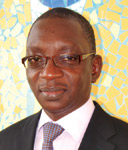
Amadou Gallo Diop
Regional Initiatives in Africa, Asia and Latin America have already begun to lay the foundations for the future and look set to build on them under the next administration now that Raad Shakir has promised “Global Involvement Through Regional Empowerment.”
By common consent, the Vienna Congress was a resounding success. Planning for Chile 2015 has already begun; Kyoto, Japan is our destination in 2017; and members are now urged to think ahead to 2019, when we return to the region of Africa or the Middle East for our biennial World Congress of Neurology.



 Please join us for the 14th Asian and Oceanian Congress of Neurology (AOCN) March 2-5 at the Convention and Exhibition Centre of The Venetian® Macao.
 Young individuals born between 1981 and 1999 belong to Generation Y (Gen-Y). They are also called Digital Natives. In contrast to their parents belonging to the Baby Boomer generation, Gen-Y individuals are comfortable with the World Wide Web. They expect to find all information online, they rapidly adopt new online services and appreciate interacting digitally. Residents and young neurologists are mainly now recruiting from this new generation. Gen-Y neurologists do show fundamental different knowledge acquisition strategies mainly focused on online resources, challenging not only online services, but also training and teaching1,2.


 The World Federation of Neurology (WFN) is a huge and complex structure, representing neurologists worldwide. To achieve its aim, many international neurologists collaborate and work on WFN projects, represent the organization as officers or serve as editors or authors for WFN media. These initiatives play an important role in advocating the interests of neurologists on a global scale.
 Bringing worldwide science and patient care closer together is a strong objective of the WFN. At www.wfneurology.org, you will find details on the World Brain Alliance, an umbrella group of international neurological organizations. WFN applied research groups organize scientific projects and educational activities in neurology subspecialties, and publish their activities on the website on an annual basis.