By Donald Silberberg

Donald H. Silberberg
As an addendum to the report from the AmericanAcademy of Neurology in this issue, I wish to add that in 2012 the AAN established a Global Health Section. At the section meeting during the 2014 AAN meeting in Philadelphia, Jerome Chin, the outgoing president of the section, announced that the section now has more than 300 members, including many from outside the U.S.
The section elected Farrah Mateen from in the Department of Neurology at Massachusetts GeneralHospital as its new president. If you are interested in seeing the activities of the Global Health Section, contact Franziska Schwarz at FBSchwarz@aan.com.
International activities during the Philadelphia meeting included:
a conference titled “Controversies in Global Health: Corticosteroids for Meningitis,” a seminar on “Global Health Challenges: Neurology in Developing Countries,” an International Colloquium that included topics such as “Dealing With Common Disorders With Limited Resources,” “Successful Examples of International Collaboration,” and Information on fellowships in the U.S. An Integrated Neuroscience Session featured oral presentations on the “Global Impact of Non-Communicable Neurological Diseases,” with poster sessions before and after. Finally, an Ethics Colloquium included a presentation on “Clinical Trials Involving International Subjects.”
In these ways, the AAN is now playing an important role in global neurology together with the World Federation of Neurology.
 The 2014 Annual Meeting of the American Academy of Neurology (AAN) attracted more than 13,000 neurology professionals to Philadelphia, a city rich in its own neurology-related history. More than 2,500 presentations of cutting-edge research were available to attendees from across the world. The number of non-U.S. attendees was nearly 4,000.
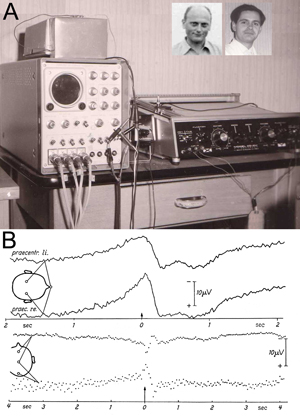
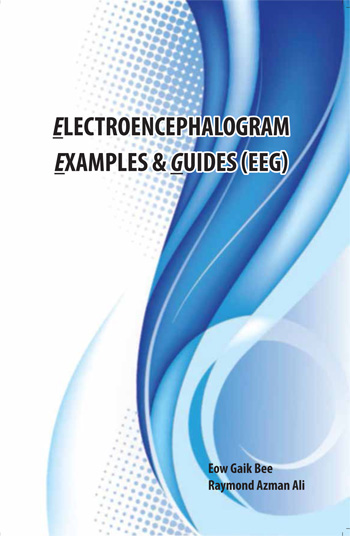 It is a privilege to introduce the book “Electroencephalogram Examples and Guides,” published in August 2013. The book provides a concise and comprehensive compilation of text and EEG recordings collected to shorten the learning curve toward competence in EEG interpretation.