By Walter Struhal, MD, Steven L. Lewis, MD, and Wolfgang Grisold, MD
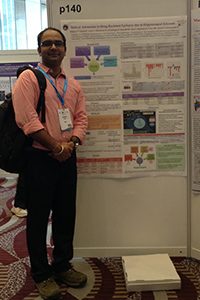
Dr. Vikas Dhiman, India, presents his poster at the 11th Asian-Oceanian Epilepsy Congress in May in Hong Kong.
The World Federation of Neurology (WFN) Junior Traveling Fellowships are awarded to gifted young neurologists to support attendance and scientific contributions at international meetings. This support is limited to lower income countries. The WFN is pleased to announce that 30 Junior Traveling Fellowships were awarded in 2016. A complete list of awardees is published online. The following are reports that have already come in from recent awardees of the 2016 WFN Junior Traveling Fellowships.
Vikas Dhiman
“I presented a poster on “The Role of Adenosine in Drug-Resistant Epilepsy Due to Hippocampal Sclerosis” at the Congress. This scientific gathering was a feat of knowledge. There were more than 40 platform and over 300 poster presentations. There were sessions ranging from didactic lectures to debates to practical workshops by the stalwarts in the field of epilepsy. Talks on some of the interesting topics, such as ketogenic diet in epilepsy, stereo-EEG, and brain networks, were the highlight of the Congress. This Congress gave me the opportunity to present my doctoral work at an international level. I had a productive interaction with eminent scientists and fellow clinicians in the Congress. The talks on genetics of epilepsy and brain somatic mutations were useful for me. Attending this Congress gave me new ideas, which I will pursue for my future research projects. This Congress helped me grow professionally and personally, and I want to thank the WFN once again for giving me the opportunity to attend.”
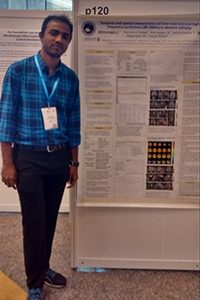
Dr. Velmurugan Jayabal, India, presents his poster at the 11th Asian-Oceanian Epilepsy Congress in May in Hong Kong.
Velmurugan Jayaba
“I attended and presented my poster at the Congress. I had valuable feedback for my research from the pioneers of the field, Prof. Akio Ikeda, Prof. Premsyl Jeruska, and Prof. Herman Stefan. I also gave my EEG certification examination during this course. I learned a lot from the basic research and cognitive aspects of patients with epilepsy.”
Bassam M. Abdulzahra Al-Fatly
“This course is a dream for any clinical neurophysiologist to meet the pioneers who introduced many of the well-known techniques to this diagnostic field. For five days, we attended theoretical lectures on every topic of neurophysiology of the peripheral nervous system starting early in the morning, followed by practical demonstrations and hands-on in the afternoon. The course was interactive between the faculty and participants. Paramount information was delivered to us on the single-fiber EMG technique from the founder Prof. Erik Stalberg. The faculty opened the door for any questions, and they took the time to answer a lot of difficult cases. Most of the participants presented patient cases. I felt privileged to be one of those who presented a case, which was on the neurophysiological diagnosis of hereditary neuropathy (Charcot Marie Tooth type I). I received a rewarding response from the faculty as well as the participant colleagues, in addition to excellent remarks on the way I presented electrophysiology results at my home institution. Among other activities, we enjoyed the social and warm welcome, which was provided by the department of neurophysiology in Uppsala University. In the end, I was honored to be among the winners of a WFN Junior Traveling Fellowship for 2016.”
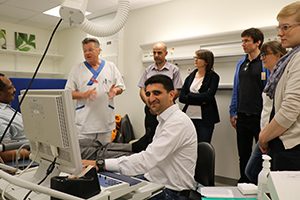
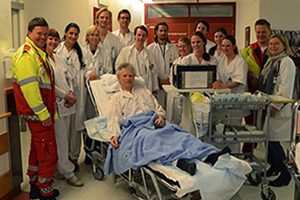
Dr. Bassam M. Abdulzahra Al-Fatly, Iraq, (seated) trains in electrophysiology at the Training Course in EMG and Neurography in May in Uppsala, Sweden.
The WFN Junior Traveling Fellowship program is meant to advocate young neurologists’ work, providing a chance to present their work and network at an international level.
Supporting the next generation of neurologists worldwide is a major objective of the WFN. The overwhelming positive response to this program from trainees and young neurologist colleagues is a strong sign of success of this important long-standing and continuing initiative.
The WFN encourages young neurologists to apply to this program in the future, and also to keep up the excellent spirit of reporting their experiences.
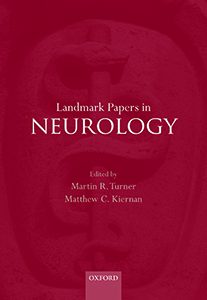 Although it is generally understood that all medical specialties constantly are growing and evolving with new scientific and technological advancements, this collection shows just how dramatically neurologic paradigms have been transformed completely through these landmark discoveries. Given the wide breadth of immunomodulatory therapies for multiple sclerosis, it is surprising to think that the first articles investigating the possibility of the use of interferon therapy in multiple sclerosis was only in the early 1980s, and treatment with interferons was only approved in the early 1990s. It seems equally surprising that in such a prevalent disease as epilepsy, so little was known about its cause until the first article describing electroencephalography in 1929, particularly given the dramatic advancements in the field of epilepsy since then.
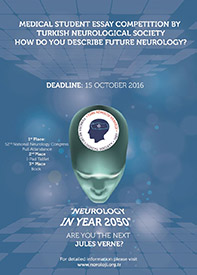 We believe we have highly talented young physicians who have the potential to become the Jules Vernes of today. We invite you to participate in our essay contest and to contribute to the future of neurology.
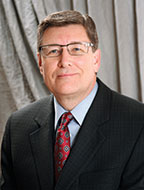
 Hamilton Farris, PhD, is the new associate editor for basic science. He is associate professor of neuroscience, cell biology and anatomy, and otolaryngology at the LSUHSC School of Medicine in New Orleans, Louisiana. He has over 24 years of experience in the fields of neuroscience, bioacoustics, and animal behavior. He has active research projects examining the evolution, ecology, and neurophysiology of sensory processing. He is the director of the medical neuroscience course, the co-director of the neuroscience PhD program, and assistant dean of student affairs for the LSUHSC School of Medicine.