By Steven L. Lewis, MD
1
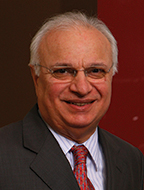
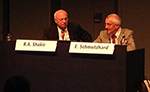
On May 29, 2016, Zika virus infections of the nervous system were the topic of a very well-attended breaking news session co-moderated by Drs. Eric Schmutzhardt and Raad Shakir (1) at the 2nd Annual European Academy of Neurology (EAN) Congress in Copenhagen, Denmark.
2
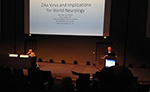
The session included talks by Dr. Shakir (2), president of the World Federation of Neurology (WFN), who spoke on behalf of Dr. John England, chair of the WFN Zika Committee, about Zika virus and its implications for world neurology.
3
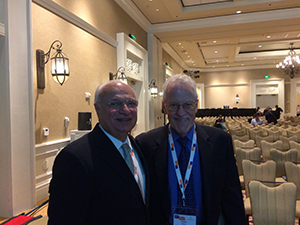
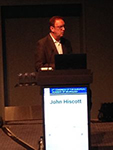
Dr. John Hiscott (3), of the Istituto Pasteur-Fondazione Cenci Bolognetti in Rome, Italy, spoke about what is now known about the immunological and virological aspects of Zika virus infection.
4
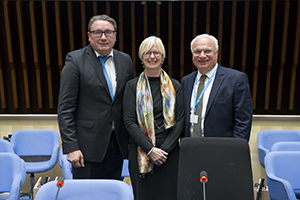
Dr. Hugh Willison (4), from the University of Glasgow, Scotland, presented the newest information about the association of Zika virus and Guillain-Barré syndrome.
5
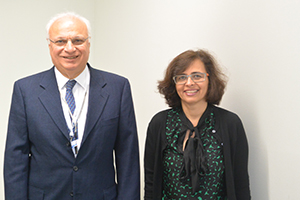
The final speaker, Dr. André Luiz Santos Pessoa (5), from the Hospital Infantil Albert Sabin in Brazil, brought the audience up to date with regard to the most critical information pertaining to Zika virus infections in newborns and children.






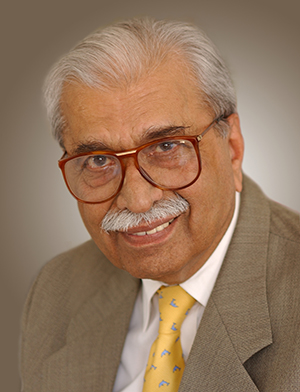 The World Federation of Neurology (WFN) lost an illustrious neurologist on April 10, 2016, with the death of Professor Noshir H. Wadia, MD, in Mumbai, India. He was 91. Wadia was universally regarded as the “founder of contemporary Indian neurology.”


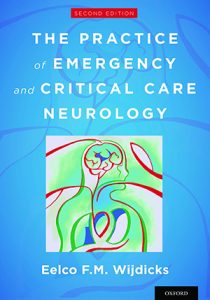 This is a comprehensive, extremely well-written, single-author textbook on emergency and critical care neurology by one of the most renowned, experienced, published, and respected neurointensivists. In his preface to this second edition, the author outlines his intention for this book to serve as a practical and data-driven guide to management of the critically ill neurological patient, rather than a textbook detailing theory. This is exactly how I perceived this book. It is organized into 12 chapters that include a symptoms-based approach, organizational aspects, general critical care aspects, and management of specific disorders, complications, or consultation situations. Some of the chapters are geared more toward the neurologist assessing emergent consultation, some to the neurologist or neurointensivist managing the specific neurocritical disorders, and some to the neurointensivist or critical care physician staffing an intensive care unit. Complex topics and concepts are presented in a clear and concise manner, and enhanced by plenty of original illustrations and imaging examples. The text is supported by available, up-to-date data, as well as the vast clinical experience of the author himself. Sensitive topics, such as end-of-life discussions or ethical dilemmas, are addressed with vision and care. The statements are clear with virtually no redundancy or ambiguity. Flow is excellent, and style and organization allow for both rapid, continuous reading, as well as rapid look-up.

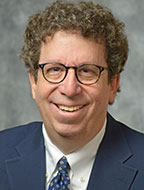



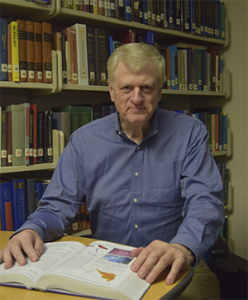
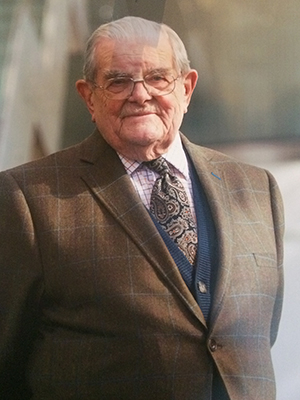 The World Federation of Neurology is remembering John Nicholas Walton, MD, who passed away in April at the age of 93. Walton, who served two terms as president of the WFN following his election in 1989, knew the organization better than anyone. His work in the WFN started from its inception in 1957. He succeeded Macdonald Critchley as editor of the Journal of Neurological Sciences when Critchley later became WFN president in 1965. He worked with Henry Miller as secretary general to shape the organization. Walton saved the WFN from bankruptcy with his compromise during the creation and later dissolution of the World Association of Neurological Commissions (WANC), which resolved the financial crisis of the WFN in 1966. He started the research group on neuromuscular disorders. He was elected first vice president during Richard Masland´s presidency. During this busy time at the WFN, he wrote Essentials of Neurology, which became a standard textbook for medical students. In 1968, he was promoted to a personal chair in neurology at England’s Newcastle University, and in 1971 he was appointed dean of the Newcastle Medical School. He was knighted in 1979, was appointed life peer in 1989 as Baron Walton of Detchant, and he sat in the House of Lords as a crossbencher.